


FAQ
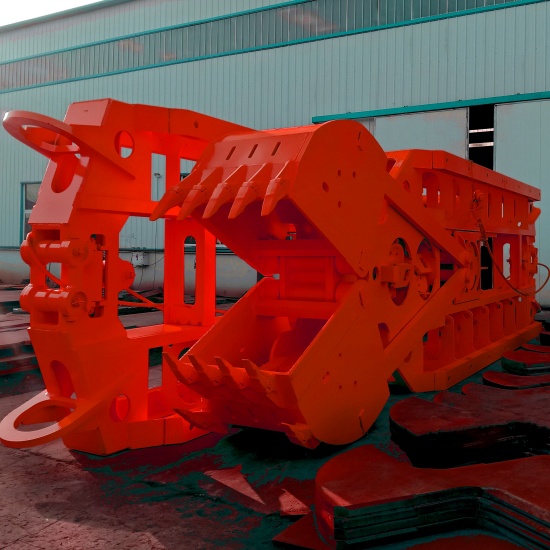
Diaphragm Wall Grab FAQ
Q1: What is a diaphragm wall grab and how does it work?
A diaphragm wall grab is a heavy-duty excavation tool used to dig deep, narrow trenches for underground structural retaining walls. It operates by lowering heavy jaws into a bentonite slurry-filled trench. The jaws use hydraulic pressure or mechanical cable winches to clamp, excavate, and remove soil and rock layers while maintaining the trench's structural integrity.
Q2: What is the difference between hydraulic and mechanical diaphragm wall grabs?
The primary difference lies in the driving mechanism and closing force:
- Hydraulic Grabs: Powered by onboard or carrier hydraulic cylinders. They offer massive closing force (up to 1,800 kN) and active steering correction, making them ideal for hard rock and precision urban projects.
- Mechanical Grabs: Operated via steel wire ropes and free-fall winches. They rely on gravitational weight to crush soil, making them cost-effective for soft clay, gravel, and ultra-deep trenching where hydraulic hoses cannot reach.
Q3: What wall thicknesses (trench widths) can a diaphragm wall grab handle?
Standard diaphragm wall grabs accommodate trench widths ranging from 600 mm to 1,500 mm. The most common industry sizes are:
- 600 mm & 800 mm: Standard for urban subway stations and basement retaining walls.
- 1,000 mm & 1,200 mm: Used for deep foundation infrastructure and heavy structural support.
- 1,500 mm: Custom heavy-duty size for dam cutoff walls and skyscraper foundations.
*Note: Widths are easily adjusted by swapping the grab's modular guide plates and jaw shells.
Q4: How do operators ensure vertical alignment during trenching?
Modern hydraulic diaphragm wall grabs feature integrated electronic inclinometers (gyro sensors) that transmit real-time verticality data to the operator’s cabin. If a deviation occurs, the operator activates dynamic steering flaps (guide plates) located on the grab body to adjust the cutting path instantly, keeping the vertical deviation strictly within 0.1% to 0.3%.
Q5: Can a diaphragm wall grab excavate through hard rock?
Yes, high-capacity hydraulic diaphragm wall grabs can excavate through medium-to-hard rock formations. To optimize efficiency in rock layers, the grab must be fitted with specialized, interchangeable chiseling teeth made of forged tungsten carbide or high-wear Hardox steel. For extremely hard, solid bedrock, a trench cutter (hydromill) or pre-drilling method is recommended alongside the grab.
Have Questions About Stop End Elements or Grabs?
Whether you need technical parameters for stop end elements (joint tubes/key joints) or require a customized configuration for your diaphragm wall grab, our engineering team is here to help.
📩 Contact us for professional consultation: [email protected]
FAQ
Contact Us

Tel: +86 10 57133886
Fax: +86 10 82893390
E-mail: [email protected]
Add: No.3-1-1904, Zhujiangmoer International Building, Beiqinglu road, Changping distict, Beijing, PRC
